The Science of Face Valid vs. Subtle Items
In the world of substance use assessment, there is a recurring challenge: the “Honesty Gap.” When a client enters a screening environment, whether due to a court order, workplace requirement, or personal crisis—they are often operating under extreme pressure. This pressure frequently manifests as denial or purposeful concealment.
The Limitation of Direct Questioning: Most screening tools rely almost exclusively on “face valid” items. These are questions where the intent is obvious, such as “How many times a week do you use stimulants?” While these questions are necessary, they are easily manipulated. A client who is not yet ready to change, or who fears the consequences of their answers, will likely underreport.
The SASSI Advantage: Subtle Scales The SASSI-4 (Subtle Substance Abuse Screening Inventory) is unique because it utilizes subtle items. These are questions that do not appear to be related to substance use on the surface, but are statistically correlated with individuals who have been diagnosed with Substance Use Disorders (SUD).
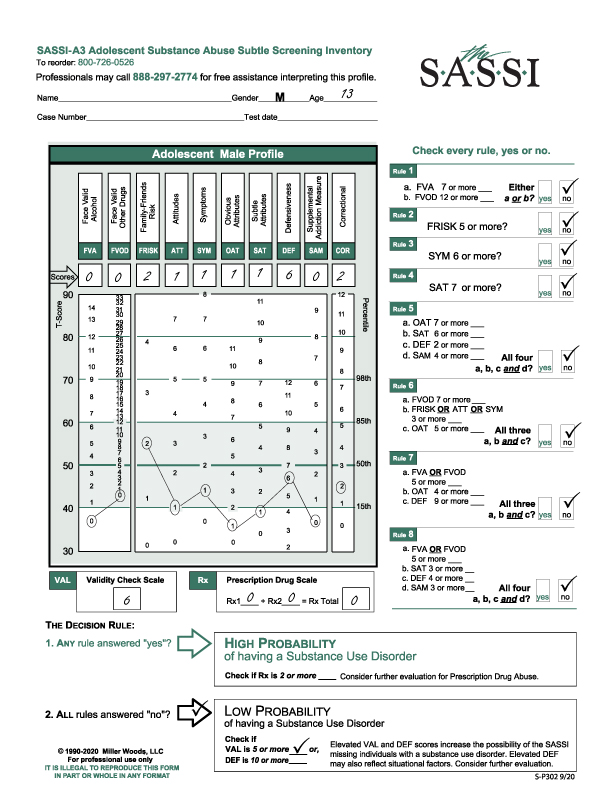


By integrating these subtle scales, the SASSI provides a “safety net” for the clinician. If a client’s face-valid scores are low but their subtle scores are high, it usually indicates a high probability of a substance use disorder based on the SASSI decision rules despite the client’s current inability or unwillingness to acknowledge it.
Clinical Application This isn’t about “tricking” the client. Instead, it’s about providing the clinician with a more accurate roadmap. Knowing that a client is defensive or in denial allows you to adjust your clinical approach—providing an opportunity for more open dialogue rather than immediate confrontation—thereby increasing the chances of long-term treatment retention.